Basement
Basement leak repair in Murfreesboro
A leak has an address: one crack, one window, one pipe. Finding it is most of the repair. Call to be connected with an independent local waterproofing company that can trace yours.
Where basements let water in
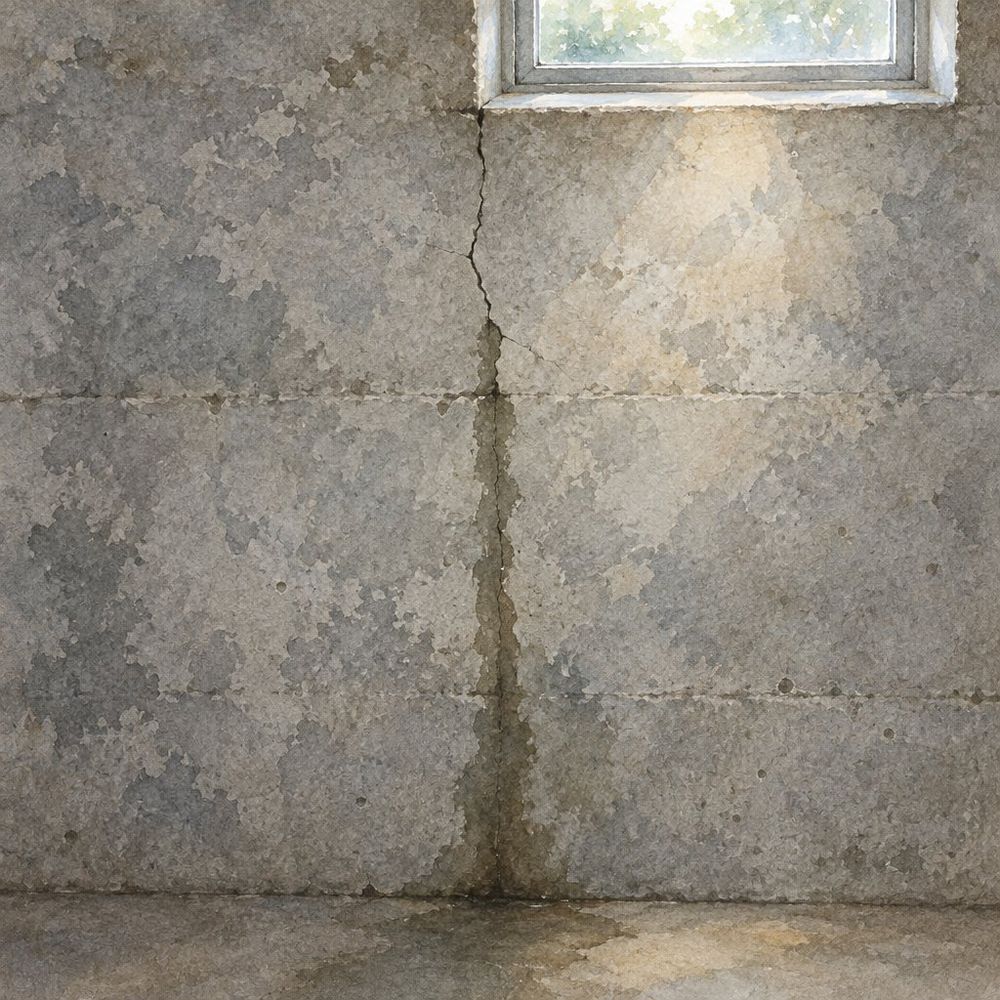
- Cracks in poured concrete walls. Thin vertical cracks form as concrete cures. Many stay dry for years, then start to weep.
- Mortar joints in block walls. Block is hollow. Water gets into the cores and comes out through a joint lower down, sometimes far from where it entered.
- The joint between wall and floor. The slab is poured after the walls, so there is a seam all the way around. Rising groundwater shows up here first.
- Window wells. A well with no drain, or a clogged one, fills like a bucket and spills over the sill.
- Pipes and wires through the wall. The hole around a water pipe, gas pipe or cable is often sealed with little more than mortar.
- Floor cracks. Water pushed up from below finds any break in the slab.
How each kind is repaired
A crack in a poured wall is usually injected from inside. Ports are set along it and a resin is pumped in until it fills the crack through the full thickness of the wall. Flexible polyurethane suits a crack that is only leaking. Rigid epoxy is used where the two sides also need bonding.
Block walls are harder, because water travels inside them. Sealing one joint tends to move the leak to the next. Draining the block cores into an interior drain is the more dependable answer, and that is basement waterproofing rather than a spot repair.
Window wells are dug out, given a gravel base and a drain, and fitted with a cover. Openings around pipes are cleaned out and filled with a sealant that stays flexible.
When a patch is the wrong tool
Surface patches of hydraulic cement or caulk are quick, and they often fail within a season because the water is still pushing from behind. If water comes in along the whole base of a wall, or at several places after every storm, the leak is a symptom. The cause is water building up in the soil outside, and it calls for drainage: gutters and grading first, then a drain system inside or out.
A crack that is wide, stepped through block, or paired with a wall that leans or bulges is a structural matter as well as a wet one. Mention it when you call, since that repair is separate from stopping the water.
Ask before agreeing to a leak repair
- Did you find where the water enters, or only where it shows?
- Which material will be injected, and why that one?
- Is the repair made from inside, outside or both?
- What does the warranty on a crack repair cover if a new crack opens beside it?
- What should I change outside so less water reaches this wall?
Leak repair questions
How do I find where the leak starts?
After rain, follow the water trail upward to its highest wet point and mark it with tape. Check outside that spot for a downspout, a low place in the soil or a window well. A photo taken while it is leaking helps the company a great deal.
Water appears in the middle of the floor. Is that a leak?
It can be groundwater rising through a floor crack. It can also be a plumbing leak, a water heater or condensation dripping from a cold pipe. If it appears in dry weather, call a plumber first.
Is leak repair the same as waterproofing?
A leak repair closes one opening. Waterproofing manages the water around the whole foundation. One leak in an otherwise dry basement needs the first. Leaks that move around need the second.
Have a leak traced
Say what you have noticed under the house or in the basement. A short description is enough to get the conversation started.
Call from Murfreesboro or nearby
You will be put through to an independent local company that does this kind of work.
Call (615) 555-0113Calls may be recorded. Read the referral disclosure to see how this service is paid for.