Outside the foundation
Yard drainage and French drains in Murfreesboro
Much of the water under a house started on the roof or the lawn. Moving it away at the surface is often the first job and sometimes the only one needed. Call to be connected with an independent local drainage or waterproofing company.
The fixes, from simple to involved
- Downspout extensions. A length of pipe carries roof water past the planting bed to open lawn. Buried versions run to a pop-up outlet further out.
- Regrading. Soil is added and shaped so the ground falls away from the foundation on every side.
- Swales. A broad, shallow dip in the lawn steers surface water around the house instead of at it.
- Catch basins. A grated box at a low spot takes in ponding water and sends it down a solid pipe.
- French drains. A trench is lined with fabric, filled with gravel around a perforated pipe and covered. It intercepts water moving through the soil and carries it downhill.
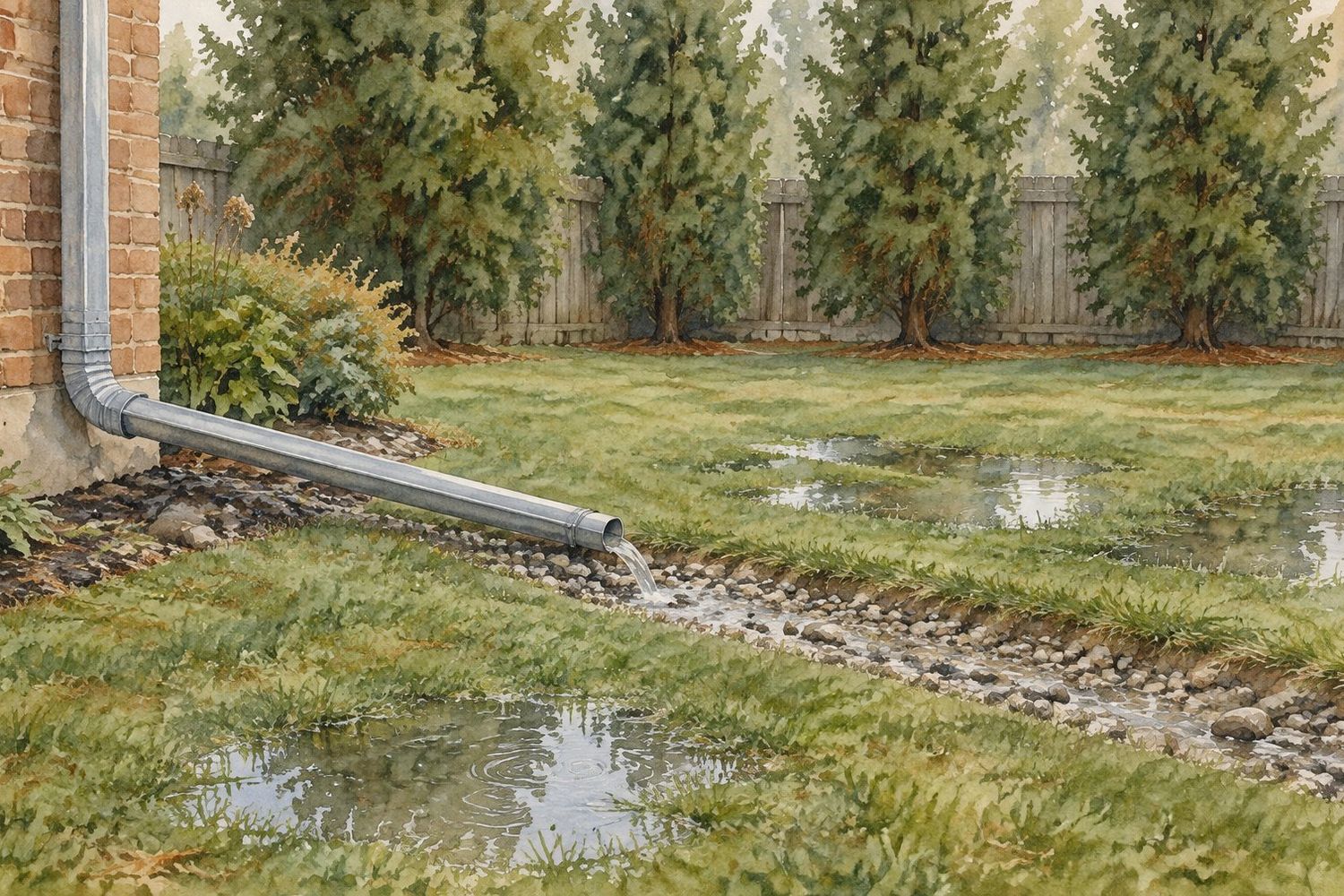
Where a French drain helps, and where it does not
A French drain earns its place uphill of the house, where water moving through the ground would otherwise reach the foundation, or along a soggy strip that never dries. It needs somewhere lower to empty. On a flat lot with no outlet it becomes an underground puddle.
It will not fix roof water dropped at the wall, so deal with downspouts first. And it clogs if the fabric and gravel are skimped. Ask to see how the trench is built before it is covered.
Three local things to know before a trench is dug
- Drainage easements. Many subdivision lots have a strip set aside for stormwater, shown on the plat. Rutherford County's engineering office says the owner is expected to keep it clear, and that blocking one with a fence or fill is illegal. A new drain should empty toward that strip, never choke it.
- Your neighbor's lot. City stormwater offices deal with public drains and ditches. La Vergne's, for one, lists runoff from one private property onto another as outside what it handles. Plan the outlet so the water stays on your land until it reaches a street drain, ditch or easement.
- Buried utilities. Tennessee 811 must be notified at least three working days before digging, and the company doing the digging needs the ticket in its own name.
Questions about a drainage plan
- Where does the water come from, and where will it end up?
- What slope will the pipe have, and where is the outlet?
- Is the pipe solid or perforated on each stretch, and why?
- What fabric and gravel go in the trench?
- Will sod be replaced or the trench seeded?
- Does any of the drain cross an easement or run close to the property boundary?
Yard drainage questions
Can yard drainage alone dry out a crawl space?
It can when roof and surface water are the whole problem. It does not change humid summer air or moisture rising from the soil under the house, which is where a vapor barrier or encapsulation comes in.
Water stands in the street or ditch in front of my house. Who handles that?
That is a public drain, so report it to whoever maintains your streets: the city you live in, or the county outside city limits. The service areas page lists the offices.
Is a French drain the same as a footing drain?
No. A French drain is shallow and sits out in the yard. A footing drain sits at the base of the foundation and is part of exterior waterproofing.
Ask about drainage
Say what you have noticed under the house or in the basement. A short description is enough to get the conversation started.
Call from Murfreesboro or nearby
You will be put through to an independent local company that does this kind of work.
Call (615) 555-0113Calls may be recorded. Read the referral disclosure to see how this service is paid for.