Crawl space
Crawl space encapsulation in Murfreesboro
Encapsulation turns a vented, dirt-floored crawl space into a sealed, dry one. Call to be connected with an independent local company that installs these systems around Murfreesboro.
What encapsulation changes
A vented crawl space is open to the weather. In a Tennessee summer the outdoor air is warm and heavy with moisture. It comes in through the foundation vents, meets cool ducts and floor framing, and leaves its water there. Below, bare soil adds more. That is how a crawl space can be wet in a week with no rain.
Encapsulation closes both routes. A thick plastic liner covers the ground and the foundation walls. The vents are closed off. A dehumidifier, or a small supply of conditioned air, keeps the sealed space dry. The crawl space becomes part of the house instead of part of the yard.
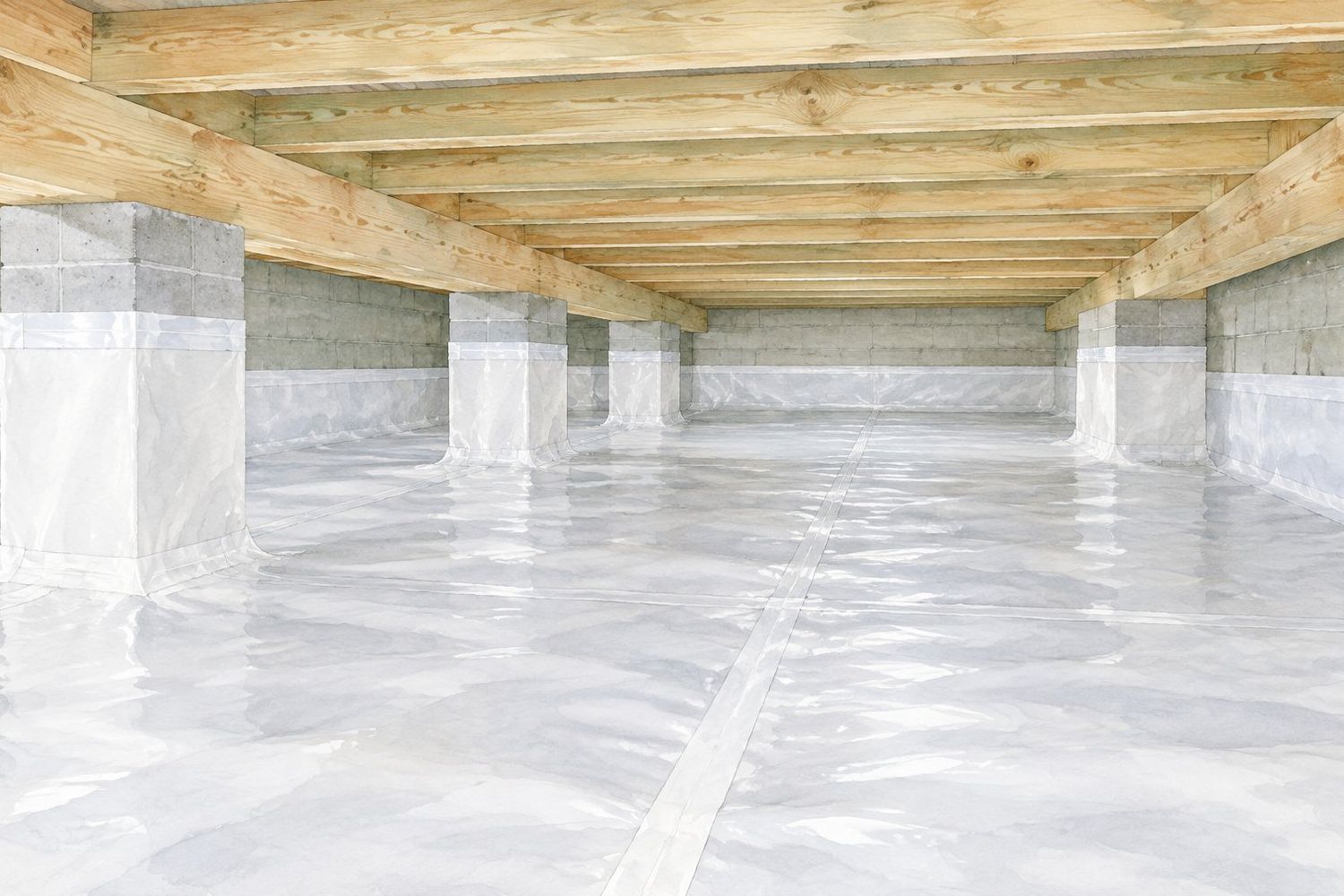
The parts of a sealed crawl space
Six things separate a full encapsulation from a sheet of plastic on the ground.
Vapor barrier or full encapsulation?
The two are often confused, and companies sometimes use the words loosely. Ask which one a proposal describes.
A vapor barrier
- Plastic sheeting laid over the soil only.
- Edges left loose or pinned to the ground.
- Vents stay open, so outdoor air still gets in.
- Cuts the moisture rising from the ground.
- Suits a crawl space that is dry apart from a damp floor.
Encapsulation
- A heavier, reinforced liner over the soil and up the walls.
- Seams taped, piers wrapped, edges fastened to the masonry.
- Vents and gaps closed, and the door made tight.
- Humidity held down by a dehumidifier or conditioned air.
- Suits a space with a musty smell, sweating ducts or damp wood.
How the job usually runs
Clear and dry
Debris, old plastic and wet insulation come out. Standing water is dealt with first, because a liner laid over a puddle hides it without removing it.
Drainage, if water comes in
Where rain or groundwater enters, a drain and sump basin are set below the level of the liner so the water has somewhere to go.
Liner
Sheets are rolled out across the floor, overlapped, taped, carried up the walls and fastened near the top. Each pier is wrapped.
Close the openings
Vent openings are blocked and sealed from inside. Gaps around pipes and wires are filled. The access door gets a gasket or is replaced.
Control the air
A dehumidifier is set on a level pad with its drain run outside or to the sump. Some systems use a small duct from the house's heating and cooling instead.
What has to be sorted out before sealing
- Standing water. Sealing does not stop liquid water. It has to be drained or pumped first. See crawl space repair.
- Roof and yard water. Short downspouts and soil sloping toward the house keep feeding the space. Yard drainage is often the simpler half of the cure.
- Fuel-burning equipment. A gas furnace or water heater that sits in the crawl space draws its air from there. Tell the company, because sealing changes where that air comes from.
- Termite inspections. Ask whether a strip of bare wall is left at the top so a pest inspector can still see the masonry.
- A mapped flood zone. If the house is in one, say so before any vents are closed. The flood zone guide shows how to check.
What to ask about an encapsulation proposal
- How thick is the liner, and is it reinforced? Is the same material used on the walls and the floor?
- How are the seams joined, and how is the liner fixed to the wall and around each pier?
- What happens to water that gets under the liner?
- Which dehumidifier is included, where does it drain, and who cleans its filter?
- Does it need a new electrical outlet, and who arranges the electrician?
- What does the written warranty cover: the liner material, the labor, or both?
- Is there a yearly service visit, and is it optional?
Living with a sealed crawl space
There is little to do, but it is not nothing. Look at the humidity reading a few times a year, more often in July and August. Many dehumidifiers show it on the unit, and an inexpensive remote sensor lets you read it from the kitchen.
Clean or change the dehumidifier filter on the schedule in its manual. After a severe storm, open the door and check that the liner is dry on top and that nothing has pulled loose. Keep stored items off the liner where you can, since boxes and tools puncture it.
Encapsulation questions
Does encapsulation get rid of a musty smell?
The smell usually comes from damp soil and damp wood under the floor. Sealing and drying the space removes that source. If the odor comes from somewhere else, such as a plumbing leak or damp drywall upstairs, it will remain, which is why the inspection matters.
Are the foundation vents really closed for good?
In a sealed system, yes. Open vents let in the humid air the liner is meant to keep out. A house in a mapped flood zone is the exception to raise with the company and the city before anything is closed.
Is a dehumidifier always part of it?
Something has to keep the sealed air dry. Most installers use a dehumidifier made for crawl spaces. Others supply a little conditioned air from the house system. Ask which is proposed and why.
How long does an encapsulation take?
It depends on the size of the space, the headroom and how much has to be cleared or repaired first. Ask for the expected start and finish dates in the written proposal.
Can the liner go over the old plastic?
It should not. Old sheeting holds mud, mold and sometimes water. A sound installation starts from bare, raked ground.
Ask about sealing your crawl space
Say what you have noticed under the house or in the basement. A short description is enough to get the conversation started.
Call from Murfreesboro or nearby
You will be put through to an independent local company that does this kind of work.
Call (615) 555-0113Calls may be recorded. Read the referral disclosure to see how this service is paid for.